Video Transcript:
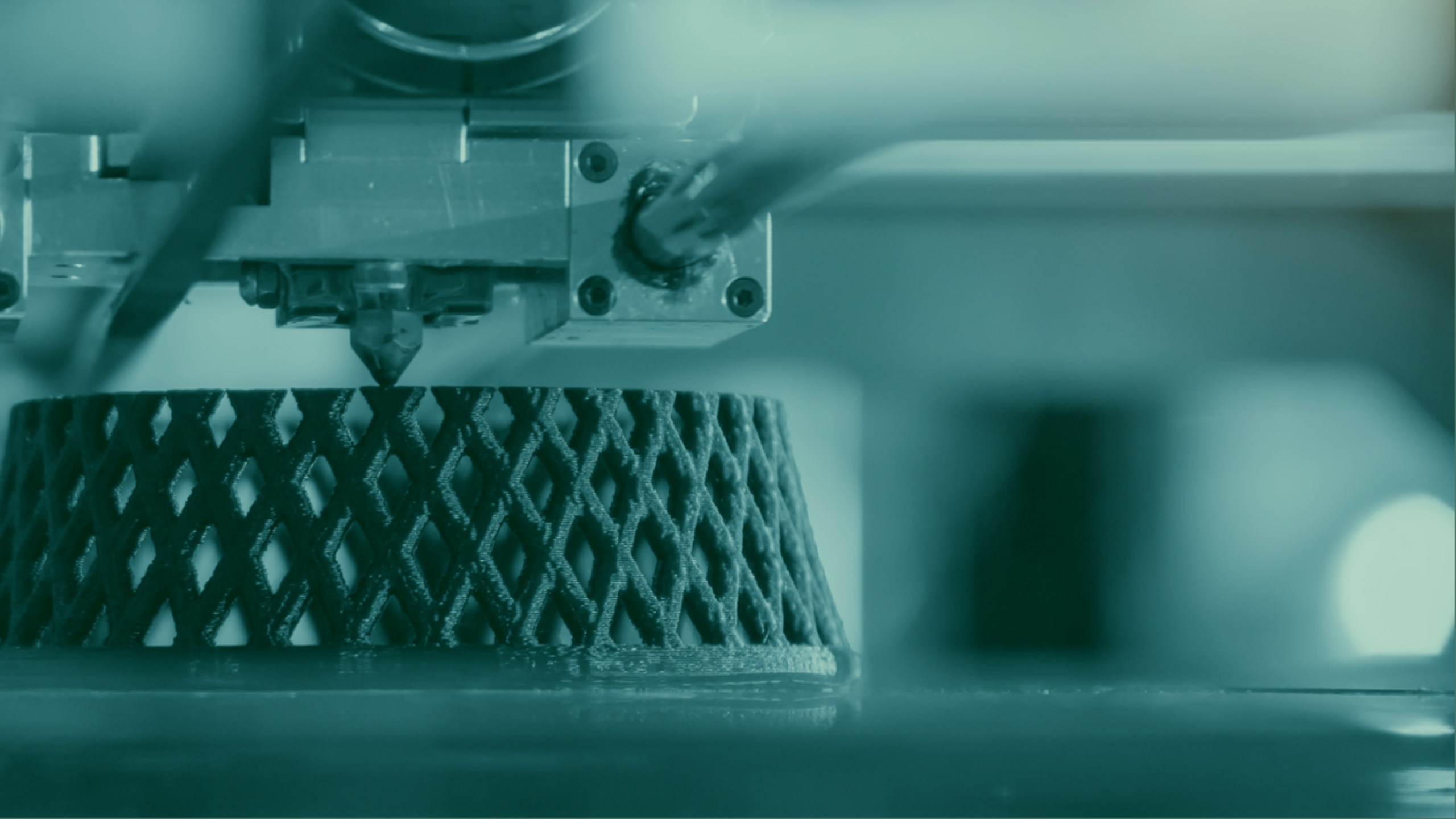
Mark Pickett and Nanci Hardwick discuss the advancements and challenges in additive manufacturing, particularly focusing on metal additive manufacturing and workforce development.
Mark Pickett
Hi, everyone, and welcome back to another SAE Government Technologies LinkedIn live event. My name is Mark Pickett and I am the technology transfer program manager here atSAE Government Technologies. For those of you who don’t know, SAE Government Technologies collaborates with government, industry and universities to solve the toughest mobility technical challenges. I’m here today with Nanci Hardwick, CEO of Meld Manufacturing Base in Christiansburg, Virginia.
Mark Pickett
Today we’re talking about additive manufacturing, and specifically we’re discussing metal additive manufacturing and the critical importance of workforce development. Just a note to our audience, if you have questions, please use the comment section and we’ll be sure to address those questions at the end of the event today. Welcome, Nanci.
Nanci Hardwick
Hi, Mark.
Mark Pickett
How are you?
Nanci Hardwick
I’m wonderful. How are you doing?
Mark Pickett
I’m good. Thanks for asking. It’s always nice to see you, and, I’m really happy to have you on the show today. Tell us about Meld Manufacturing and a little bit about your journey, because I love your story.
Nanci Hardwick
Thank you. Well, Yeah. And we’ve known each other a few years now. I’ve been working on bringing this technology, to, a real manufacturing tool for industry for a very long time. About to celebrate 17 years. And I was very proud of that accomplishment. Probably somebody smarter with more resources could have done it faster, but here we are. Proud of where we’ve gotten to. Yeah, we started out with the concept and, have been very lucky to have the support of, industry from, you know, space to ship building, to allow us to develop that technology into a manufacturing tool that allows folks to print metal components. Usually, you know, with forged properties or a little bit better, literally any size, and it’s been a journey that has taken me around the world, on, ships and, manufacturing plants and, places I’ve been so honored to be able to peek inside of and see how things are really made.
Mark Pickett
That’s fantastic. And I it just blows my mind to think that you’ve been at this for 17 years. So, I’m never going to doubt your perseverance. I mean, I think, as a as a young lady in a tech field and the manufacturing environment, I think you probably had just initially some headwind and you were able to keep after it year after year after year after challenge after challenge, and, and now you’re starting to see, well, you’ve had some tremendous success over the last, least handful of years that I can see.
And certainly that’s, that’s building momentum going forward. So kudos to you. And, congratulations to your success.
Nanci Hardwick
Thank you. Thank you very much. What we’re doing is important, and I’m excited to share it as far and wide as I can. And I mean, we’re here to serve humanity.
Mark Pickett
That’s a very similar, I guess, statement to SAE’s mission statement, and that’s to advance mobility solutions for all of humanity. So I think we’re aligned there. You know, you mentioned we’ve known each other for a few years, I think back to when we first met. And I think it’s around the time that Ingersoll Rand was building the large additive friction stair deposition machine with your technology for the Rock Island Arsenal and also the smaller machine that has gone into SAE’s advanced manufacturing and commercialization center in Sterling Heights, Michigan. From your perspective, I’d love to hear, especially now looking back and then as we look to the future, can you tell us about that program that’s relevant to this two machines and Meld’s role?
Nanci Hardwick
Yeah, I love to talk about it. But also I’ll point out, actually, when we met, you were not yet a part of SAE
Mark Pickett
That’s right.
Nanci Hardwick
We did not know, just how much our worlds would collide. Serendipity would be at play. I remember meeting you and thinking, that’s someone I would like to get to know better. And someone who gets things done. So that turned out very much to be true. When we were first approached by the Army, you know, I, I did not believe that they would go forward with the idea that I was hearing to make this gigantic printer.
And at that time, it was not guaranteed, that it would be the Meld technology. You know, it was, not the technology, dependent concept. The idea was how can this capability, become a real reality for the Army? And, you know, obviously, we were so humbled and honored to be selected, unanimously by the group who selected a technology to build that giant printer around.
Beyond the obvious benefits of the printing capability itself. And what will be possible with that kind of demonstration capability? For me, one of the things that was most exciting about being a part of that project or even just observing that project, from the outside, was the signal the US Army created by telling, you know, the United States, other departments of defense and, and really the world, how important they feel additive is and how scalable additive can be.
I think it took a lot of courage. I’m sure it took a lot of years. And you talk about perseverance. I think a lot of people can work very hard to make that project a reality. And, it was we all benefit from it because these major investments, signal to industry, and they signal to the additive community, you know, industry is ready.
This is the future. We will be making large scale components and at Meld, you know, every day the definition of large, gets a little bit bigger. I really thought no one would top that. I thought that would be the world’s largest printer for forever. You know, but the calls keep coming in to see what else is possible.
So, it just goes to show, you know, leadership, and vision comes from all directions. But, yeah, I, I think, it’s been a critical project and, and a real milestone for the industry as a whole. And, and I’ve been delighted to be a part of it.
Mark Pickett
Yeah. Me too. And just to see it go through all the, you know, the different steps in development. So just for the audience, so they get a sense of how large this machine is in Rock Island. I mean, it’s the size of a of a pretty decent size house. But the print volume itself and what we’re trying to do there, I think, is we’re trying to print a combat hull at scale.
So that gives people a sense of, you know, a combat vehicle or a tank or optionally manned fighting vehicle. What, what that looks like. So in terms of feet, you know, x, y, z, do you have that at the tip of your mind?
Nanci Hardwick
I have big round numbers. So this is not exactly precise, but 20ft wide, 30ft deep. 12ft high, I believe are the big round numbers. And, yeah, I be I’d be right in a house the size of that machine.
Mark Pickett
Yeah. No kidding. Same. So, just for the audience, you know, there’s a there’s a platform, and the machine sort of hangs over this, this platform area, this print volume, and it runs on to very large rails. And there’s a gantry that spans those, those rails. And so it, you know, the machine takes, the print data and just goes to work and takes, you know, metallic rods through, around and applies a certain amount of pressure, and plasticizers, the material doesn’t melt it.
which is very key in terms of its performance. And, the integrity of the part at the end of the print. So it’s a pretty fascinating thing to see. Especially as it’s printing. So I’ve always been fascinated with that.
Nanci Hardwick
Yeah. It’s, it’s a wonder. And really, in terms of, how much, hardware real estate belongs to Meld, and that’s very small. The gantry system that was designed and fabricated by Ingersoll, is the machine platform. And then the Meld hardware that that allows it to be an additive machine, was added, or integrated
and, and of course, Siemens was a partner on that project as well. And there’s another machine in your care, for industry to collaborate on as well, I believe.
Mark Pickett
That’s right. And the print value is not quite as big. I think it’s a cubic meter, but still large and in some cases. But, I believe an engineer from Ingersoll told me the gantry was 100,000 pounds by itself. So, again, giving you a sense of, how large that machine is. I want to come back to
I want to pick it 17 years too much. Because I’m getting a little, old myself, but,
Nanci Hardwick
That’s funny, I this month, I can. How many of my gray hairs can be in this, image.
Mark Pickett
While working on the same project I would imagine, does not bode well for gray hair. But anyway, you look fantastic. In 17 years. I mean, can you talk about just, the nature of the AM community from the metal perspectiv You must have seen some tremendous transformation.
Nanci Hardwick
Yes. Oh, what a privilege. I mean, I, I have said, and thought for a long time not too many people get to experience, you know, firsthand and up close, a new era. And I feel additive is a new era for industry and for manufacturing. And, and it’s just been so much fun, to have a front row seat, and be a part of it.
In the beginning of my journey, additive was not a word we said, you know, and there was, you know, we’ve kind of been through it. 3D printing. additive. There have been a lot of names for our, our technology and our, our young industry. But, in the beginning of my journey, really barely anyone I spoke with knew new any of them.
And so when I tried to explain what I thought our capabilities were, I was met with a tremendous amount of skepticism. And I’m not sure how successful I would have been if the additive industry didn’t grow up around me. And really change the paradigm of the world. And it was, fantastic to inspire people, you know, all of a sudden and rather than -- you do what?
What do you mean you don’t melt the metal? People were saying, hey, do you do additive? Can I talk to you about that? We need to figure out an additive strategy, at our company and so, so much easier to share what’s possible when, when the pathway, to explore it is already open.
But, yeah, it’s been tremendous. And so many pioneers have made their contributions to the industry and in all types of materials. So, I mean, it’s been amazing to be able to become friends with those folks and share their journey to.
Mark Pickett
Absolutely. I think about a common friend that we have, we visited in Harrisburg University, in Pennsylvania, and we were talking about the acceleration of innovationand the fact that, it’s really starting to accelerate. And so as we celebrate that, that’s one side. But the other side is that, we really have a deficiency in technical skills and workforce that that can keep pace with that innovation and actually be the, the folks, the engineers and technicians that that run those machines and develop those processes and so on.
Mark Pickett
And so really the topic of the day today is workforce development in the context of metal additive manufacturing. So can you speak to that a little bit about, you know, that that acceleration and why additive manufacturing number one is so important? But especially in the context of, the defense industrial base.
Nanci Hardwick
Yeah, I, I also want to comment about the rate of innovation.
Mark Pickett
Oh.
Nanci Hardwick
It’s amazing. You know, there was a time when whatever anyone wanted to know about the Meld technology, they came and asked Meld and now I go to a metal user group and I listen to presentations by our customers and think, oh, wow. Not only is that accomplishment amazing, I didn’t even know you were working on that.
So it’s so fun to see the rate of innovation and knowledge and understanding, grow exponentially. And, to do that, it does come back to machines installed and a user community which runs the spectrum of, you know, machine operator to material scientists to, business, people who have to make the financial justifications.
So when we talk workforce development, we talk a lot about, you know, the guy right in front of the machine. But the need is across the spectrum there. There’s so much that we need. And its importance is made obvious every day. For me, I’m, you know, particularly motivated to see our technology be useful in, in mankind’s exploration of space.
But industries, you know, all over the globe, are, are coming to our door and, you know, particularly the Meld, am, modality because of a shortage of getting large metal components quickly or even metal billets just to machine down apart, for our, defense industrial base. That’s really what it comes down to, is bringing back, autonomy, and self reliance, being able to manufacture in-country, source materials in-country and being able to innovate quickly.
When you are prototyping a new vehicle, whether it’s for air or sea, you might need 1 or 2, quantity, 1 or 2, of large metal components. Very difficult to get, very difficult to move up to the front of the line for those lower quantities. So serving the needs, the current need, but also, creating next generation product, all comes back to metal and.
Mark Pickett
Yeah. And I think maybe the traditional approach, at least from my short experience, has been let’s take, a subtractive CNC person and convert them to an additive person, as opposed to maybe, exposing, you know, students and, and college engineering. But not only just engineering, but the young people that maybe want to take a vocational pathway to a skilled trade, and a technician approach to participating in the additive manufacturing space.
Mark Pickett
So, yeah, I think that, you know, there’s a lot of opportunity to create, enthusiasm around, additive metal additive manufacturing. And certainly we need to create a talent pipeline becauseas we look at the geopolitical landscape these days and and we look at places where a conflict could occur, there’s going to be contested logistics, and it’s going to be difficult to get, parts to the frontlines to sustain forces.
And so we need to have, like you said, we need to reassure that capability and, that the, the individuals that are going to support the defense industrial base. What are some of the barriers to use, do you see? I mean, why haven’t we cracked this code? I mean, the DoD is probably one of the largest employers of engineers.
So is it just lack of awareness? Do you think it’s the lack of concerted, focused effort? All the above. I mean, what’s your perspective?
Nanci Hardwick
And you’re asking specifically, why don’t we have more folks at the ready?
Mark Pickett
Yeah. Like. Yeah.
Nanci Hardwick
Yeah. Gosh. Every, everywhere I look and anyone with any ability to influence this situation is working on it. So I would say the awareness is very high that this is a need, for many, there’s a high awareness that there’s plenty of opportunity here. I, I logistically, we’re ushering in a new era and nothing
this big and this new happens overnight. I’m, you know, I was just, on a phone call yesterday with, some of our local partners. One of them is New River Community College. Great workforce development, great training resource that I personally rely upon from my companies. And, they’re there at the ready, but they can only do so much to support training on specific equipment, cutting edge technologies when they don’t have those technologies, when they don’t have the facilities to put the equipment into, when they don’t have staff that are already trained, curriculum that’s already developed.
So it’s a big investment to be made, to put the machines in facilities that students can get to. That’s step one. And then facilitating those students making their way to programs, to participate, that’s, that’s really step two. And I do think a lot of folks are working on it, but I, I wish, you know, it’s one of the things I’m working on.I’m trying to see facilities with machines in them right in my own backyard.
And, we have them in the state, but, we all need more.
Mark Pickett
Absolutely. Thanks. I appreciate your comments. You know, SAE has a professional development group within SAE International. I think we have over 450 classes and training programs, deployed broadly in the mobility space. But I think that is a muscle that we can exercise. And the capability we can leverage, to focus directly on additive manufacturing.
And so you and I have talked about whatever is in that capability beforeand I’m looking forward to actually, you know, putting rubber to pavement on that. And then additionally, our university programs, our collegiate design series, the Baja formula. Baja, and the other things that we’re doing in autonomy. I also think that there could be an element, an aspect of additive manufacturing as the students collaborate, design and build, mobility platforms and then compete.
I think that’s another way to improve the exposure to at least university students. But I’m glad you mentioned New River because, we were working on a collaborative effort last year, and unfortunately, due to some challenges, we couldn’t take it over the goal line with the proposal. But it really focused on marginalized communities and underserved communities. We are going to leverage those local community colleges and pull them into you know, some of the universities that had Meld assets that we could then, you know, perform training and create awareness and maybe motivate students to either go into a four year program or just motivate them, you know, to take their
vocational training over the goal line so that they could contribute and, and, you know, find employment in additive manufacturing. And I think, I think we can do more of that in the future.
Nanci Hardwick
Yeah. I really liked that particular initiative because it did target communities of students that might not otherwise be targeted. And I do think there’s so many resources out there for us if, if we can just help, get smart, capable folks, to a place where they can get the training, I really think that SAE has a big role to play here, as do the universities, as do our community colleges.
I’m a part of the, VMA, which is a Virginia Manufacturers Association. They do training, you know, if you want to go fast. But you leverage the strengths of the resources already available. I shouldn’t be, the person trying to figure out how to train. I, I definitely should be the person supporting people like you and those I mentioned to make sure you can deliver with the infrastructure you already have in place.
Mark Pickett
Yeah. Talk a little bit about, I believe there’s a celebration. Congratulationsin order, with respect to the tech hub in Virginia, I think that’s adjacent, if not dead center in the middle of workforce development. Can you talk to that?
Nanci Hardwick
Yeah. I am very proud to say that the federal government, awarded my community a Tech Hub grant. The criteria was to, have inside the community a technology with international appeal, significant economic development opportunity for the community. Obviously support within the community, to really build an ecosystem around additive. And we were selected our community, includes Danville.
so the advanced that ADTM. Yeah. And the Navy’s center of excellence for additive there. They’re included and many partners. I think over 50 organizations are partnering. And this is all about, how do we train? How do we encourage all the support organizations, you know, machine shops, heat treatment, inspection technologies, you name it, everything that industry needs to be successful with additive.
How do we create an environment in which these members of the industry can be successful. And I’m very hopeful that, next time youvisit, or one day in the future when you visit, there’ll be a facility here with machines, where folks are being trained and, yeah, thanks to Congressman Griffith, we have a step in the right direction for that.
Between Virginia Tech and New River with Meld technology. So at least Meld technology, there’ll be some training next time you can visit. But I’d love to see a much broader facility with all the modalities because, obviously Meld is near and dear to my heart. But it is not the only tool we need to be successful with additive in, in industry for sure.
Mark Pickett
But I think that that experience in that model could be expanded and replicated across the country, you know, with modifications to accommodate that local geography and landscape and, and participants. But, expectations are high, but I’m sure that you’re going to be able to model that so others can follow, and we can make a big impact in workforce development space and manufacturing space.
Nanci Hardwick
Yeah. Yeah, I would just add, what’s really exciting to me about it is, where I am in Virginia, we have such a legacy and a proud, history of manufacturing, and this is an opportunity to take that and just move it into the next era. You know, build upon it, not transform it, not replace it, but build upon it.
And I do see many other communities in the United States that could do the same.
Mark Pickett
Yeah. One layer at a time. So I’m giggling a little bit because it reminds me of a conversation we had where you were a little bit frustrated because you were really trying to evolve your tech and you’re like, my gosh, you know, I’m making parts for people, you know, and I love making parts for people, especially with Meld technology.
But, you know, I’m really trying to get to Meld 3.0 and 4.0. And, and so you developed PrintWorks, which is brilliant.Talk a little bit about the launch of PrintWorks and what it’s all about.
Nanci Hardwick
Well, actually, I’m talking to you from PrintWorks, right now. So, yes, I am having so much fun over here. Last year I launched a separate company. At Meld Manufacturing. We were just trying to do it all for everybody, and we’re small. And so in an effort to allow people to focus on what was most important, I started a whole new company dedicated to printing parts with the Meld technology.
So I think I’m, maybe one of the only service bureaus, in this part of the state, whose whole business is additive. But PrintWorks is just full of Meld machines, making metal parts for a living. And, so I can tell you, I need a workforce.
Mark Pickett
Like that.
Nanci Hardwick
Yeah I’m very excited to have a place to send employees and have them come out with their Meld operator certificate and learn about engineering and design for Meld. So, yes, it’s been so much fun.
Mark Pickett
So maybe we can collaborate and create that curriculum together and then, you know, deploy that to other, other places that are receiving, Meld machines. I think that as a company scales, I’m hearing more and more about, you know, the National Institute for Aviation Research, they’re getting their Meld machine and the Air Force is getting their Meld machine. Your success is creating quite a demand for folks that are then going to be operating those machines.
Can you talk about where you’re at now as a company and where some of these machines are going that you’re excited about?
Nanci Hardwick
Oh, yes. Well, we now have machines with the major players in the space industry, so I’m obviously very proud of that. I’m glad to be of value and of service there. And right now in the U.S., investments inbeing able to manufacture chips is very important. So the semiconductor equipment industry is a place where we’re very busy at the moment.
Shipbuilding, obviously. Lots of history there for us with Meld and then aerospace. And it’s been, very fun to start to move into civil aircraft projects in the aerospace industry around the world. For me, all of our customers are exciting. I mean, it’s just such a privilege to be able to be a part of the manufacturing challenges of so many industries.
You know, it’s fun to play in other people’s backyards for a little while and think about the things that they’re facing and think about their products and think about how we can help. You know, what can we do differently to be a better service in the future? But the more machines we install, the greater the need for a workforce.
So, you know, if at this point, the workforce demands are great, I can only imagine what they would be, you know, three, four, five years from now. So we really collectively have a lot of work to do to, to make sure that we’re ready because, having the technology, having the equipment and having the material, only gets you so far if you don’t have the talent to do something with it.
Mark Pickett
Absolutely. So I think, there’s another big, big news story for Meld and that is, a large contract that you just received from the Air Force. Can you talk about the nature of that contract and with what the intent is and purpose and, and, how you think that’s going to play out. Thatwould be good to know.
Nanci Hardwick
Oh, sure. Yeah, we were very excited. I don’t think I’ve ever seen that many zeros in the contract before, but, but it is a IDIQ contract, so it is important to clarify. It’s an opportunity. And now we have to earn the right to do work and to receive task orders on the contract.
So we’re excited to have projects that we do ourselves or with our partners that demonstrate value to the Air Force. And it’s all about sustainment. It’s all about serving at the point of need, at the time of need with both new product, new supply and then repair. So, yeah, really, very appreciative of the opportunity to serve and really appreciatejust the confidence, that was demonstrated by the Air Force in the, in that and other commitments they’ve made to the Meld technology.
You know, I, I really think we owe a debt of gratitude to anyone who makes a big pledge to additive. And that’s what they did for Meld and many others.
Mark Pickett
Yeah. Well, to me, my perception of that, you know, because I’ve been fortunate to have been part of conversations with different branches of the military and, you know, at least my initial observation is they were taking just a slightly different pathway to additive usage and use cases and also adoption and part qualification.
And one might imagine that additively manufacturing a part that goes on a land vehicle versus something that flies through the air, might look a little bit different in terms of part qualification. So I was excited to see that our work, because I think it’s signaling that there is this shift in adoption and people are starting to collaborate and talk across service and say, how can we, you know, collaborate and get to a place where we can confidently print parts and feel confident that they’re going to work, at least for a period of time, and really support sustainability.
Nanci Hardwick
I think that what is, remarkable or at least notable, is the shift from focus on risk of failure, to focus on the risk of, loss of opportunity. I, I hadn’t really thought about that before, but it’s been a long time since I felt I was engaged in conversation around Why? It won’t work.
Why? Why it’s a bad idea. You know, just additive in general. But there was a time that was true, you know, and now I think there’s a lot more thought and energy put into, how do we make sure we maximize every opportunity we have to go as fast and as far as possible, safely, smartly?
Mark Pickett
Sure. Absolutely. So, again, to the audience to have questions. I think we’re starting to get some comments. Now go ahead and put your questions in the comment section. I want to leave enough time for us to answer questions here today in our LinkedIn Live event. One of those questions, by the way, you have fans. So I have to just shout out to Lisa Block, who I’m also a fan, Lisa.
So I get it. She said. So Nanci, so good to see you keeping AM in the forefront.
Nanci Hardwick
I’m a fan of Lisa.
Mark Pickett
I second that that notion. But, so we were just talking about part qualification a minute ago. From your perspective, you know, what does the future look like in terms of the Meld technology, additive manufacturing and part qualifications across the DoD? I know we’re picking on Department of Defense a little bit, but yeah, I think it’s aa good topic, especially today.
Nanci Hardwick
Yeah. Again, there was probably a time when I thought things are moving. You know, I’m an impatient person. I know you know, that.
Mark Pickett
Seventeen years. I don’t know.
Nanci Hardwick
Yeah, I didn’t say I handled it patiently, though. Anyway, so there was a time when I probably thought, yeah, it’s not moving fast enough, people aren’t doing enough. But, I do see a lot happening around qualification right now. And, again there, it’s, you know, it’s a big lift.
There’s, there’s a lot to do, a lot to figure out, a lot to, contemplate, and make sure we’re getting it right. Because, as you say, you know, lives will be on the line. I feel very confident in the efforts that I’m seeing. I have wondered, you know, how we could streamline qualification, for example, you know, Meld is an outlier and how it works and the fact that we’re not melting and solidifying metal, you know, makes us different, makes it different enough that that work.
Those standards aren’t exactly a one for one match. And so now, there are organizations and institutions that are working on specifications and standards specifically for Meld. And it does, you know, and we’re just at the beginning of the whole AM revolution. So who knows how many more technologies we’ll have five years from now.
So it does cause me to wonder, is there a way for us to set up this qualification infrastructure so that it could be more accommodating of new technologies. And I don’t know the answer to that because it’s a tough job. But I do appreciate everyone that’s working on it.
Mark Pickett
Yeah. For sure. It’s an important topic. Another question is, you see here, from your perspective, both of you, what do you see in the context of workforce development? What do you see that’s working? And, maybe activities and efforts that have failed and haven’t worked so well.
Nanci Hardwick
Okay. Well, I’ll go first, if you don’t mind. I mean, I’ve been, up to the University in Harrisburg. I’ve been down to the center in Danville. I’ve been in a few other locations. Not necessarily for additive yet, but I’ve been to community colleges. So what I see, as a best practice is having the equipment, hands on training.
There’s nothing like it. I mean, there’s no amount of bookwork that can replace being in front of a machine. And, that’s about the most expensive way to train an entire workforce. But that’s what I see working.
Mark Pickett
I, I can see that. And hands on works for me as a learner. So it just makes a lot of sense that if you’re going to learn how to operate machinery and drive technology forward, that you actually put your hands on actually do the workas you learn, From my perspective, you know, I think about, additive manufacturing data like, aggregating other experiences and building a repository and library of data that can be shared and democratized across the space.
So that we don’t have to reinvent the wheel every single time somebody goes to print an aluminum alloy, there’s a foundation that’s being built, as this additive community is building data and getting stronger and learning and sharing, and then taking that data and creating standards so that when your machine arrives, a customer, they’ve got some things they can go, they’ve got curriculum, they’ve got standards that they can leverage to shorten their learning curve and start making parts that qualify.
So I think data and standards, of course, I’m a little bit biased being an SAE person, but you know, I’m talking about all standard development organizations and all companies that are out there trying to move the needle in additive manufacturing, especially metal. So, that’s my perspective of, of, you know, what can make an impact.
And also, I’ll just, you know, complete my thought with collaboration. You know, when you’ve got government stakeholders coming to the table, you’ve got industry participants like yourself and you’ve got academia collaborating,that’s a powerful mixture. Yeah. And I think that with government funding and, you know, stakeholder engagement, we, can really make a big impact in workforce development.
Nanci Hardwick
I think we have to share everywhere that we can, that we’re comfortable. I mean, that was a big motivation for me to set up the Meld user groups and to get my customers together because I saw they were not talking and, and often didn’t know. And sometimes, you know, multiple organizations inside the same Department of Defense were pursuing the same activity without realizing their neighbor was, so I did see a need to help people connect.
Many people want to collaborate. They just are unaware of others to collaborate with and, you know, forum. So I think that is an important piece maybe that we could consider when we, when we talk about workforce development is just how do we bring people back and keep getting that feedback because that is the accelerator for innovation is to come together and to share information, and build on each other’s accomplishments rather than, you know, all progress at the same exact pace, independently.
Mark Pickett
Yeah, yeah. Well said. I’ll just hang out for a couple more minutes in case we get a late question here. I think we’ve gone to the questions that I received. Nanci, thank you so much for your time. And always great to interact and see you and look forward to visiting Virginia very soon. Thanks, Charlie and Traci, behind the scenes making this happen.
Really appreciate you. And I look forward to collaborating in workforce development. Nanci.
Nanci Hardwick
Always. Yeah. Thank you very much! Thanks everyone for the opportunity. Really appreciate it.